Chula Vista Appliance
Open menu

Washer Repair

Washer repair calls often involve water, vibration, tight laundry spaces, and daily scheduling pressure. We inspect the machine, the connection points, and the symptoms before quoting the repair.

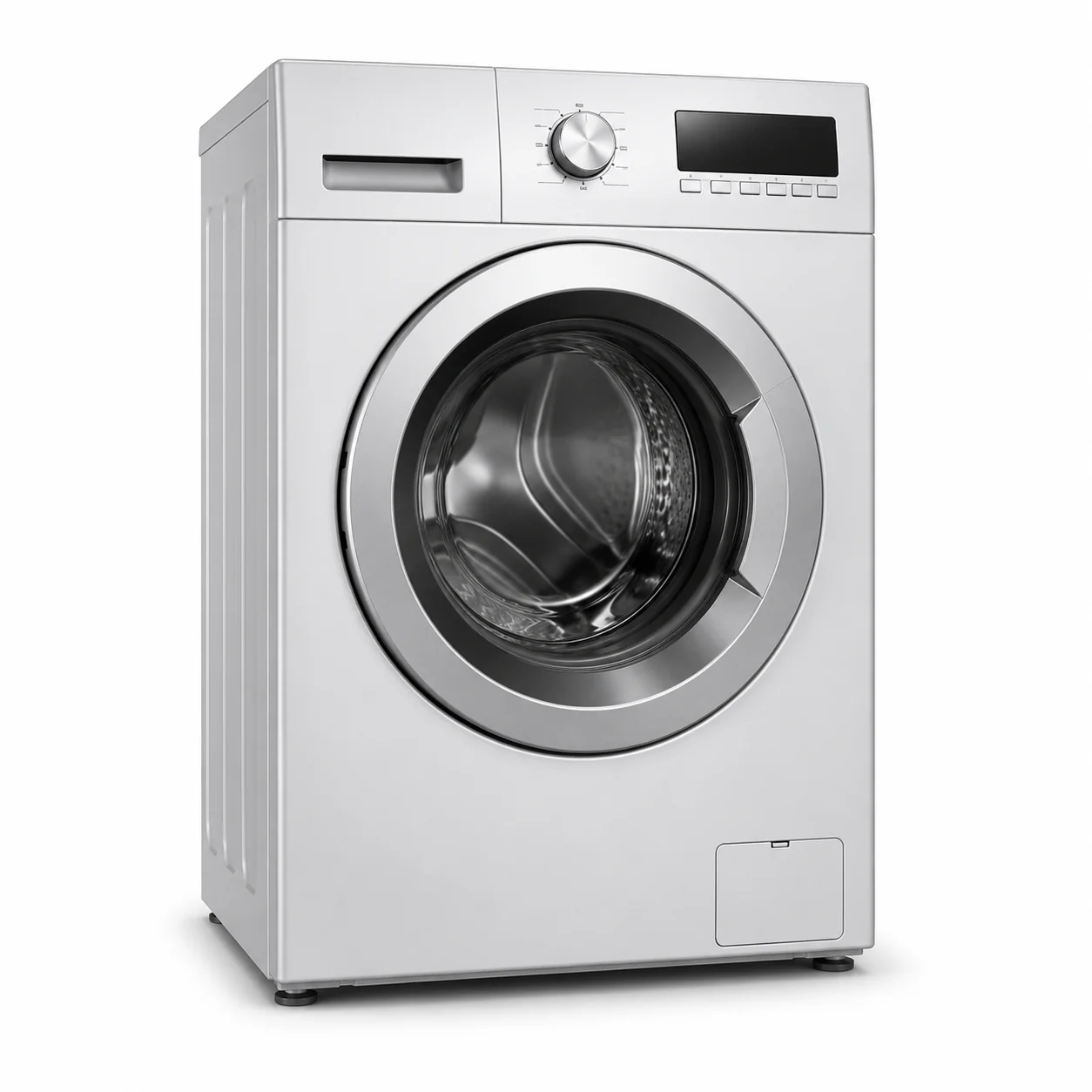
Front-load washing machine repair service

Ask AI / Quick answers

Direct Answers

Short, straight answers to the questions people and AI assistants ask most about this service.

Who repairs washing machines in San Diego and Orange County?

Chula Vista Appliance handles washer repair across both counties from our Chula Vista home base, from South Bay garages to second-floor laundry closets in Irvine. We are an independent, repair-first company, not factory-authorized for any brand, and every job starts by finding the actual fault and explaining it plainly. Reach a real person any hour at (760) 400-6688 or use the Book Online form.

Book a visit

How much does it cost to diagnose a broken washer?

A flat $89 service call covers the technician coming out and diagnosing the machine on site, whether it won't drain, won't spin, or leaks. Because a stopped mid-cycle washer can be a sensor or control fault rather than a mechanical break, we confirm the repair price only after that in-person inspection. We never quote a guaranteed final number sight unseen.

See pricing

Can you come out the same day for a washer that is leaking?

Same-day washer repair is often available when the schedule allows, which matters most for an active leak spreading toward the drywall or a hamper of soaked laundry going sour. The phone at (760) 400-6688 is answered 24/7, and service visits run daily from 8:00 AM to 6:00 PM. Upstairs leaks from a second-floor pan get priority since water can reach ceilings below before you see it.

How it works (FAQ)

What washer brands and problems do you work on?

We service the full spread that Southern California households run, from high-efficiency LG and Samsung front-loaders to heavy-duty Speed Queen and commercial Maytag top-loaders, plus tight-built European units like Bosch, Miele, and Asko. Common calls include no-drain pump filters, off-balance spin, worn drum bearings, door-lock faults, and torn front-load door boots. As an independent shop we are not factory-authorized, so the focus stays on an honest repair.

All washer repair

Why does my washer fill slowly or leak around the seals here?

Hard water across San Diego and much of Orange County is the quiet culprit. Scale collects inside the inlet valves until the machine fills sluggishly or trips a long-fill error, and the same minerals stiffen seals and coat the internal heaters on Bosch, Miele, and Asko models. Coastal salt air also corrodes hose accesss while inland heat near Escondido ages rubber faster, so we look for these regional fingerprints during diagnosis.

San Diego County

How do I book a washer visit and what does the $89 include?

Book by calling (760) 400-6688, answered 24/7, or through the Book Online form, with visits daily from 8:00 AM to 6:00 PM. Describing your setup helps, whether it is a stacked closet, a garage corner, or an upstairs alcove, so the technician arrives ready for the access. The $89 service call puts a technician in front of the machine to test the real circuit, and the repair price follows only after that inspection.

Book online

Washer repair, explained without the runaround

When Laundry Day Stalls Out In San Diego And Orange County

A washing machine fails in a hundred small ways before it fails in one obvious one. The load sits soaking wet because the spin never finished. Water creeps across the floor from somewhere you cannot see. The drum thumps so hard during the final cycle that the whole machine walks an inch sideways. Or the door simply will not unlatch, holding your clothes hostage behind a pane of glass. These are the calls we take every day across San Diego County and Orange County, and from our home base in Chula Vista we cover the full stretch of both, from South Bay garages to second-floor laundry closets in Irvine.

Our approach is repair-first and plain-spoken. The point of a visit is to find the actual fault, describe it to you in words that make sense, and put the machine back in service.

You can reach a real person at any hour by calling (760) 400-6688, since the phone is answered 24/7, and service visits run daily from 8:00 AM to 6:00 PM. When the schedule cooperates, same-day washer repair is often available, which matters a great deal when a leak is spreading or a hamper of soaked laundry is going sour.

Why A Washer Won't Drain, Won't Spin, Or Stops Mid-Cycle

The single most common complaint we hear is some version of "it filled, it washed, and then it just quit. " A washer that refuses to drain is usually telling you that water cannot get out fast enough, and the culprits cluster around the drain path: a clogged pump filter packed with lint and the occasional coin, a sock wedged in the pump impeller, a kinked or blocked drain hose, or a drain pump motor that has stopped turning. Front-load machines hide a removable filter behind a small access door near the floor, and on units that have not been cleaned in years it can be genuinely startling what comes out of there.

Spin problems often ride along with drain problems, because most washers will not spin until they sense the water is gone. If drainage checks out and the drum still will not spin, attention shifts to the drive system, the motor and its control, the belt on belt-driven designs, or a worn clutch. A cycle that stops partway through is frequently a sensor or control issue rather than a mechanical break, and that distinction is exactly what an on-site diagnosis is meant to settle so the quote you receive reflects the real repair instead of a guess.

Across both counties we see these failures on every type of machine, from high-efficiency front-loaders by LG and Samsung to the heavy-duty top-load build of a Speed Queen or a commercial-style Maytag. The symptom looks the same from the laundry room doorway, but the part that failed and the labor involved are not, which is why diagnosis comes before any number.

  • Won't drain: clogged pump filter, blocked or kinked drain hose, failed drain pump
  • Won't spin: drainage fault first, then drive motor, belt, clutch, or control
  • Stops mid-cycle: sensors, lid or door lock, or control board, more often than mechanical failure
  • Leaves clothes soaking: a drain failure masquerading as a spin problem

Tracking Down A Leak Before It Reaches The Drywall

Few appliance problems do collateral damage as fast as a washer leak, and the trouble with leaks is that water travels. We work leaks methodically, checking the fill hoses and their washers, the inlet valve, the internal tub-to-pump hoses, the door boot or bellows on front-loaders, the pump itself, and the gaskets and clamps in between. A cracked rubber boot on a front-load machine is a classic, since detergent residue and trapped grime slowly degrade the seal at the bottom of the door.

Detergent matters more than people expect. Overdosing a high-efficiency washer creates excess suds that can overwhelm seals and push water past gaskets that would otherwise hold fine, so part of a good leak diagnosis is reviewing how the machine is actually being used, not just what is broken inside it. Brands like Bosch, Miele, and Asko are engineered tight and efficient, and they are particularly sensitive to the wrong detergent and to scale buildup at the seals.

When a leak shows up in an upstairs laundry closet, the stakes climb quickly, because water that escapes a second-floor pan can find its way into ceilings and walls below. We treat those situations with the urgency they deserve, and if you call early at (760) 400-6688, same-day attention is often possible before a minor drip turns into a drywall repair.

When the spin cycle sounds like a freight train

The Banging, Walking Machine: Vibration And Off-Balance Loads

A washer that shudders, bangs, or physically moves across the floor during spin is rarely just being dramatic. On front-load machines, violent vibration often points to worn shock absorbers or suspension springs, failing drum bearings, or counterweights that have loosened over years of use. Bearings tend to announce themselves first as a low rumble that grows into a roar as the drum speeds up, and ignoring that sound usually means a larger repair later.

A machine that was never quite leveled, or that sits on an uneven garage slab common in older South Bay and inland homes, will amplify any imbalance.

Top-load washers have their own version of this story, where a worn drive coupling, tub bearing, or suspension rod set lets the basket wobble out of true. Whether the machine is a workhorse Whirlpool top-loader or a high-spin Electrolux front-loader, the goal is the same: find the part that lost its grip and restore the smooth, balanced spin the machine was designed to deliver.

Door-Lock Faults And The Washer That Won't Start Or Open

Modern front-load washers will not run without a confirmed door lock, which is a safety feature that becomes a headache the moment the lock or its switch goes bad. If the door latch assembly fails, the machine may refuse to start at all, flash an error, or stop early in the cycle. The opposite problem, a door that will not open after the wash, is just as common and usually traces to the same lock mechanism, a drainage fault that keeps the safety interlock engaged, or a control issue that never released the latch.

Top-load machines rely on a lid switch or lid lock instead, and when that component wears out the washer often fills but refuses to spin, since it cannot confirm the lid is safely closed. These parts are inexpensive in the grand scheme of a washer, but diagnosing them correctly means distinguishing a bad switch from a wiring problem or a control board that is not reading the signal.

Because the symptoms overlap so heavily with drain and control faults, door-lock complaints are a good example of why hands-on diagnosis pays off. The $89 service call puts a technician in front of the machine to test the actual circuit rather than swapping a latch that may not have been the problem in the first place.

A Southern California fact of life

Hard Water Is Quietly Corroding Your Washer's Valves And Seals

Water across San Diego County and much of Orange County is hard, and that mineral content works against a washing machine in ways that build up slowly and then bite all at once. Scale collects inside the water inlet valves, narrowing the passages until the machine fills sluggishly or trips a long-fill error. The same minerals stiffen seals, leave residue that keeps clothes from rinsing clean, and coat the internal heater on the European-style washers that heat their own water, such as many Bosch, Miele, and Asko models.

A slow fill is one of the most common scale-related failures we diagnose. The machine sits there taking forever to reach level, and homeowners often assume the problem is water pressure when it is actually a partially blocked inlet valve. Left alone, a struggling valve eventually fails outright, and the gradual nature of scale damage is exactly why treating only the symptom leads to a repeat visit a few months down the road.

Coastal and inland conditions add their own pressures. Homes nearer the coast deal with damp, salt-tinged air that is unkind to metal hose accesss and clamps, while inland properties from the South Bay out toward Escondido contend with heat that ages rubber components faster. When we service a washer here, we look for these regional fingerprints rather than treating every machine as if it lives in a climate-controlled vacuum.

Front-Load Versus Top-Load: Different Machines, Different Failures

The two basic washer designs fail in characteristically different ways, and knowing which you own shapes the diagnosis. Front-load machines are gentle on clothes and sparing with water, but they ask for maintenance most owners never give them. The door boot traps lint, hair, and detergent sludge, which breeds odor and eventually degrades the seal, while the bearings behind the drum carry the entire weight of high-speed spins and wear over time. Mildew smell, a gritty door gasket, and a growing spin-cycle rumble are the classic front-load complaints.

Top-load washers, including the rugged top-loaders that keep Speed Queen and commercial Maytag popular with people who do real volume, tend to fail at the drive system, the lid switch, the clutch, or the transmission. They are simpler in some respects and more forgiving of detergent and load mistakes, but a worn drive coupling or a tired tub bearing will still bring laundry day to a halt.

We service the full spread because Southern California households run all of it. The same week we might handle a panel-matched Electrolux front-loader in a Newport Beach laundry room and a no-frills Whirlpool top-loader in a Chula Vista garage, and the diagnostic mindset shifts to match the machine on each call.

Stacked, Closet, And Garage Laundry: Access Changes Everything

Where a washer lives is not a cosmetic detail to a repair technician, it is half the job. Stacked laundry pairs, common in townhomes and newer condos throughout both counties, require careful handling because the dryer often sits directly atop the washer and the two are tied together in a tight column. Servicing the lower unit can mean working in a confined space where every connection and clamp has to be reached without disturbing the unit above.

Closet repairs bring their own constraints, with bifold doors, minimal side access, and pedestals that raise machines for easier loading but complicate access to the pump and rear connections. Garage setups, which are everywhere in older South Bay neighborhoods and inland homes, usually offer more room but introduce uneven slabs, longer drain runs, and exposure to heat and dust that age components faster.

We come prepared to work in the space you actually have rather than the ideal one a manual assumes. If you can describe your setup when you call, whether it is a stacked closet, a garage corner, or an upstairs alcove, it helps us arrive ready, and you can book either by phone at (760) 400-6688 or through the Book Online form.

An honest look at the trade-off

How We Decide Between Repairing And Replacing Your Washer

Repair-versus-replace is the question every homeowner eventually asks, and we answer it the same way we would for our own laundry room. The decision weighs the cost of the specific repair against the age, build quality, and overall condition of the machine. A drum bearing replacement on a five-year-old premium washer that otherwise runs beautifully is usually worth doing. The same repair on a tired, lower-end unit that has nickel-and-dimed you for years may not be.

Build quality genuinely matters here. A Speed Queen, a quality Maytag, or a well-kept Miele is engineered to be serviced and to last, which tilts the math toward repair far more often than a disposable-grade machine does. We factor in what parts cost, how many hours the labor runs, and whether the failure is a one-off or the first of several likely to follow, then we lay that out plainly so you can make the call with real information.

We never quote a guaranteed final figure sight unseen, because any honest number depends on what the inspection actually finds.

Frequently Asked Questions

Why won't my washing machine drain at the end of the cycle?

The most common reasons are a clogged pump filter, a kinked or blocked drain hose, or a failed drain pump, and on front-loaders the filter behind the lower access panel is a frequent offender. Because most washers will not spin until they have drained, a drain failure often shows up as a load left soaking wet. A technician can pinpoint which part is at fault during the on-site visit so you get an accurate repair rather than a guess.

Is it worth repairing an older washer or should I just replace it?

It depends on the machine. We weigh the cost of the specific repair against the washer's age, build quality, and overall condition, and well-built brands like Speed Queen, Maytag, and Miele are designed to be serviced and usually justify repair. If the numbers favor replacement, we will tell you honestly, and the final repair price is confirmed only after the $89 diagnostic visit.

My front-load washer smells musty and the door won't seal right. What's going on?

That combination almost always points to the rubber door boot, which traps lint, detergent sludge, and moisture that breed odor and slowly degrade the seal. High-efficiency detergent overuse makes it worse by leaving residue behind. We can clean or replace the boot and check the surrounding seals so the leak risk and the smell both go away.

Can you fix a washer that vibrates hard and moves across the floor during spin?

Yes, that is one of the most common repairs we handle. On front-loaders it usually traces to worn shock absorbers, suspension springs, or failing drum bearings, while top-loaders may have a worn drive coupling or tub bearing. We also check stability checks and footing first, since an unlevel machine on an uneven garage slab can cause the same symptoms with a much simpler fix.

Do you offer same-day washer repair in San Diego and Orange County?

Same-day washer repair is often available when the schedule allows, which matters most for active leaks and loads of laundry stuck in a machine. We serve San Diego County and Orange County from our Chula Vista home base, with service visits daily from 8:00 AM to 6:00 PM. Call (760) 400-6688, where the phone is answered 24/7, and we will get you booked as quickly as possible.

Why does my washer fill so slowly all of a sudden?

In Southern California a slow fill is very often hard-water scale narrowing the water inlet valve, though it can also stem from a clogged inlet screen or low supply pressure. The mineral buildup is gradual, so the machine fills more and more sluggishly until it eventually trips a long-fill error or the valve fails outright. We diagnose the actual cause on site so the repair addresses the buildup rather than just the symptom.

My front-load washer finished the cycle but the door won't open and my clothes are stuck inside. What now?

A door that stays locked after the wash usually traces to the door lock mechanism, a drainage fault that keeps the safety interlock engaged, or a control issue that never released the latch. Because modern front-loaders will not unlock while they think water remains, the fix depends on which of those is actually happening. A technician can test the latch circuit on site and free your laundry, then confirm what the real repair involves before any price is set.

Is there anything I should do before the technician arrives for my washer?

If it is safe to do so, unplug the machine or switch off its breaker and shut the water supply valves behind it, especially if there is an active leak. Clearing wet laundry and any items stored on top or around the unit gives the technician room to work, which matters most in tight closet or stacked setups. If you can describe your layout when you book, whether it is a garage corner, an upstairs alcove, or a stacked pair, it helps us arrive ready for that space.

How long does a typical washer repair take once the technician is there?

Many common repairs, such as clearing a clogged pump, replacing a drain pump, swapping a door lock, or changing inlet valves, are handled in a single visit. Bigger jobs like drum bearings or a suspension overhaul take longer and sometimes hinge on parts availability for your specific model. The technician can give you a realistic time estimate after the on-site diagnosis, since that is when the actual fault and the parts needed become clear.

We have a stacked washer and dryer in our condo closet. Can you still service the lower washer?

Yes, stacked pairs in townhomes and condos are routine for us across both counties. The dryer often sits directly on the washer in a tight column, so the lower unit is serviced carefully in that confined space without disturbing the unit above. Letting us know it is a stacked closet setup when you call helps the technician come prepared for the limited access and the connections that have to be reached.

Water is leaking from my second-floor laundry closet. How fast can you come out?

Upstairs leaks are a priority for us because water that escapes a second-floor pan can reach the ceilings and walls below before you ever see it spread. If you call early at (760) 400-6688, where the phone is answered 24/7, same-day attention is often possible. In the meantime, shutting off the water supply to the machine helps limit the damage until a technician can find the source.

Can I book a washer visit through your website instead of calling?

Yes, you can request a service visit through the Book Online form on our site, or call (760) 400-6688 if you prefer to talk to someone, since the phone is answered 24/7. Service visits run daily from 8:00 AM to 6:00 PM across San Diego County and Orange County. Either way the visit starts with the $89 service call, and the repair price is confirmed only after the technician inspects the machine in person.

Service call:$89Service visits:Service visits daily, 8:00 AM - 6:00 PMCalls:Calls answered 24/7Area:San Diego County and Orange CountyPricing:Final repair pricing is confirmed after an on-site inspection.

Customer Reviews

These reviews are written around washer repair calls across San Diego County and Orange County, with details matched to this page's service focus.

Camila T.

Newport Beach - Washer Repair

2 weeks ago

"The best part of this washer repair visit was the explanation. The price was explained before the repair started, the service call worked around work hours, and the clothes came out properly spun."

Appliance service review

Priya S.

Irvine - Washer Repair

3 weeks ago

"The scheduling was straightforward on our washer repair call in Irvine. The technician showed us the part that was causing the problem, explained the repair, and the washer completed a full cycle."

Appliance service review

Grace C.

San Diego - Washer Repair

5 months ago

"For washer repair, this felt very organized. Since the appliance access was tight, I expected a headache, but the estimate included the access issues and the machine stopped shaking across the floor."

Appliance service review

Victor A.

Irvine - Washer Repair

1 week ago

"I booked washer repair in Irvine because water leaked from the front during rinse. The technician cleared the access area before moving the machine, the quote was not padded with extra work, and the door unlocked normally."

Appliance service review

Lena F.

Newport Beach - Washer Repair

3 months ago

"I booked washer repair in Newport Beach because the door stayed locked after the cycle ended. The technician tested the drain path instead of just resetting the washer, the price was explained before the repair started, and laundry day went back to normal."

Appliance service review

Maria G.

Poway - Washer Repair

4 months ago

"For washer repair, this felt very organized. Since the water line was tucked behind the unit, I expected a headache, but the service call and repair cost were separated clearly and the door unlocked normally."

Appliance service review

Need help with this kind of appliance issue? Schedule service and tell us what is happening with the machine.

View Review Page