Can you really come out the same day in Fountain Valley?
Often, yes. Our service visits run daily from 8:00 AM to 6:00 PM, and same-day repair is frequently available when the schedule allows, which is exactly why calling early matters. Phone (760) 400-6688 anytime - we answer 24/7 - and we'll tell you honestly what today looks like for your neighborhood.
How much does it cost to have a technician look at my appliance in Fountain Valley?
The diagnostic visit is a flat $89. That brings a technician to your home to find the real root cause and explain it in plain language.
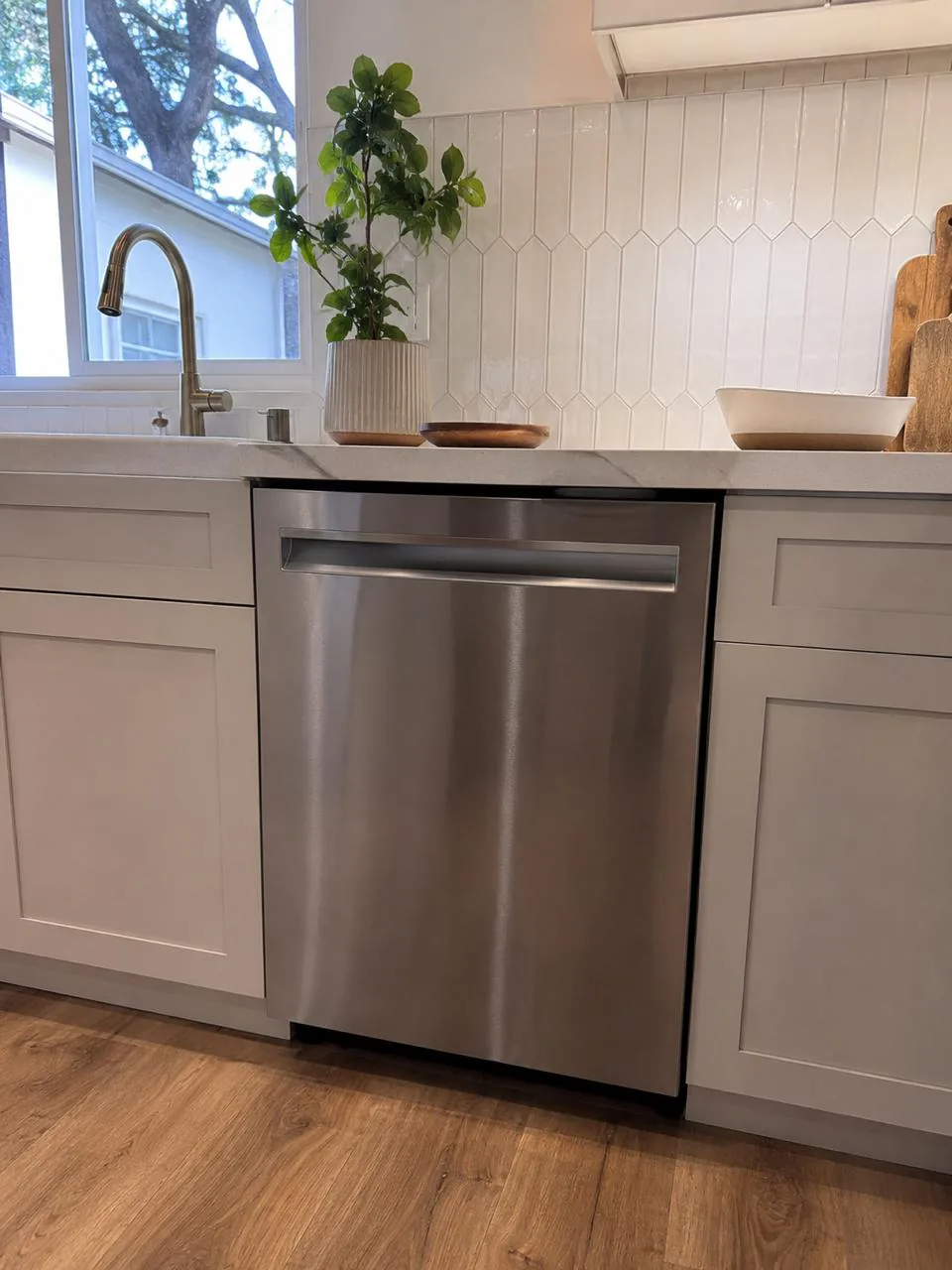
My dishwasher leaves a cloudy film and won't get dishes clean - is it broken?
Usually it's not truly broken; it's Orange County's hard water at work. Mineral scale clogs the spray-arm holes, coats the heating element, and films your glassware, while a tired drain pump or worn door seal can mimic a bigger failure. We diagnose the actual cause so you fix the problem once instead of replacing parts that scale up again.
How do I book without using email?
There's no email involved. Just call (760) 400-6688, where a real person answers around the clock, or use our Book Online form to request a visit. We'll schedule you within our 8:00 AM to 6:00 PM daily window, often the same day, then diagnose the issue on-site for $89.
My dryer in the garage takes two or three cycles to dry a load - is the motor going bad?
Usually not. In Fountain Valley's garage laundry setups, the dryer vent often runs a long lateral path before it exits the wall, and a long or lint-packed run chokes the airflow so clothes stay damp and the dryer runs hot. We check the venting first, then the heating element, thermal fuse, and on gas models the igniter and valve. Clearing or fixing the vent restriction frequently brings drying times right back to normal.
My second refrigerator in the garage struggles every summer - can that be fixed?
Often, yes. Inland Orange County afternoons get genuinely warm, and a fridge or freezer in a hot garage runs its compressor far longer to hold temperature, which pushes a marginal compressor, condenser fan, or start relay over the edge in July and August. We inspect those components, clean the condenser coils so the unit can shed heat, and check that it has room to breathe. We'll tell you honestly whether a repair makes sense for that particular unit.
We live near the coast and the screws and brackets inside our appliances are rusting - what causes that?
Fountain Valley sits just a few miles from the Huntington Beach coastline, so marine, salt-tinged air rolls in regularly and is corrosive over time. It attacks metal fasteners, control board contacts, and exposed connections, and it pits and spots even stainless steel, especially on units kept in garages or on patios. During a visit we check the corroded contacts and hardware that salt air actually attacks so we address the real cause rather than just the symptom.
Is there anything I should do before the technician arrives for a refrigerator that stopped cooling?
A refrigerator losing temperature is a countdown on hundreds of dollars of food, so call early at (760) 400-6688 and, if you can, move the most perishable items to a working fridge or cooler. Leave the unit plugged in and clear a little space around it so the technician can pull it out and reach the condenser coils. It also helps to note whether it sits in a hot garage or an air-conditioned kitchen, since that points us toward the failure mode faster.
Our stacked washer and dryer is in a hallway closet - is it serviceable in such a cramped spot?
Yes. Many Fountain Valley homes have laundry tucked into a hallway closet or the garage, and we plan for those tight, enclosed spaces. We handle the common failures there - washers that won't drain or spin, leaks from a worn door boot or pump, and no-heat or vent-restricted dryers - and we work out the access before we start. Clearing a path to the closet ahead of the visit helps the work go quickly.
Is it worth repairing an old top-load washer, or should I just replace it?
It often is worth repairing. Many washer failures are wear items - pumps, belts, bearings, suspension, lid locks, and door switches - and on a sturdy machine those are practical, sensible fixes rather than reasons to toss it. Our approach is repair-first with an honest repair-or-replace assessment, so if a unit ever needs a part that costs more than a sensible replacement, we'll tell you that plainly. The final call stays yours after the on-site diagnosis.